


“Tourism is a process of mutual learning”
“Tourism is a process of mutual learning”
She is a scientist who looks beyond the confines of the purely academic: Dr. Nyoman Dini Andiani is a practitioner through and through. In Bali, she supports projects in villages that are exploring how tourism can be organized in a more equitable and economically viable way—and filled with meaningful programs—so that it truly lives up to its name. In an interview with globalmagazin, the founder of the Buleleng Homestay Association and current head of the Indonesian Homestay Association (IHSA) for Bali explains why and exactly how she is pursuing this goal.
What does sustainable tourism require?
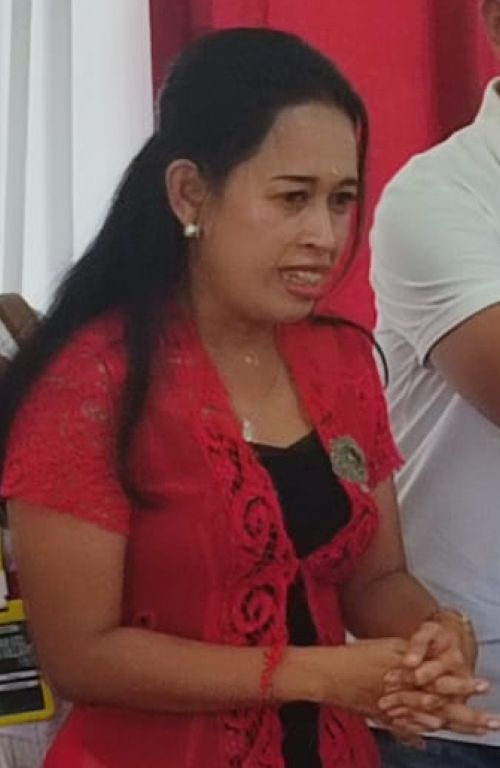
Dr. Nyoman Dini Andiani: Sustainable tourism is not just about creating attractions or activities to draw in tourists and increase revenue. At its c ore, sustainability depends on the community as a key player — a community that can maintain a balance between nature, culture, the environment, and social life.
What exactly do you mean by that?
When people live, work, and shape tourism together while protecting their environment, the benefits of tourism can be shared and contribute to the well-being of everyone—which benefits both the Balinese people and our guests. For me, there is no sustainability without harmony. This is where community-based tourism plays an important role.
What kind of tourists does Bali need?
Bali doesn’t just need tourists who come to spend money. Bali needs responsible and committed travelers who appreciate the Balinese way of life and are willing to contribute to the protection of Bali. They enjoy nature and culture, learn from the local people, respect local values, and are also willing to share positive knowledge—for example, about waste management and environmental awareness. In short: I believe that tourism should be a mutual learning process: tourists learn from Bali, while the communities can also learn from the visitors. In this way, tourism can create not only economic but also social, cultural, and environmental value for Bali.
Why is this topic important to you—and is it more about theory or practice?
This topic is important to me because it bridges the gap between theory and actual practice in communities. As a researcher, I focus on sustainability, the SDGs, community-based tourism, participation, and empowerment. However, I am convinced that theories and research are only truly meaningful when they address the actual needs of communities.
See also:
What do you mean by that?
Through my direct involvement in communities, I am able to understand their challenges and work with them to apply knowledge in the context of social projects. At the same time, my on-the-ground experiences enrich my teaching and research, including my work on community-based tourism, women’s empowerment, and waste management. For me, then, it is not a matter of choosing between theory and practice. Theory provides knowledge, practice provides reality, and the connection between the two can bring about meaningful change—both for the community and for academia. This is also the harmony that I believe is necessary for sustainable tourism.
What is currently preventing the success of good or sustainable tourism?
In my experience, sustainable tourism often fails because tourism development focuses exclusively on short-term profits and increasing visitor numbers. A destination with a wealth of natural, cultural, and man-made attractions requires the involvement and commitment of all stakeholders—not just to benefit a single person or group, but to work together to protect and manage its potential.
Other challenges include the gap between policy guidelines and their implementation, poor coordination among stakeholders, waste management, and public behavior, as well as a lack of awareness among some tourists regarding their responsibility to protect the destination…
…So you have different priorities?
In my view, sustainable tourism should focus not only on how many tourists visit, but also on how long they stay, what they contribute, and how tourism can improve the lives of local communities while protecting nature and culture for the future.
Can sustainable tourism also offer the people of Bali economic security and a future?
For Bali, however, sustainable tourism should not be understood solely in terms of economic growth or income. Long ago, our ancestors taught us the philosophy of Tri Hita Karana—harmony between people, nature, and God. If we protect nature as the foundation of our destination, preserve our valuable culture, and ensure that local communities are actively involved and benefit from tourism, economic security can be achieved in a more sustainable way.
pit
Translated with DeepL.com (free version)
